連載コラム【マーチングと海外】#4 マーチング留学で経験してきたこと(後編)(梶山宇一)
2026-11-01
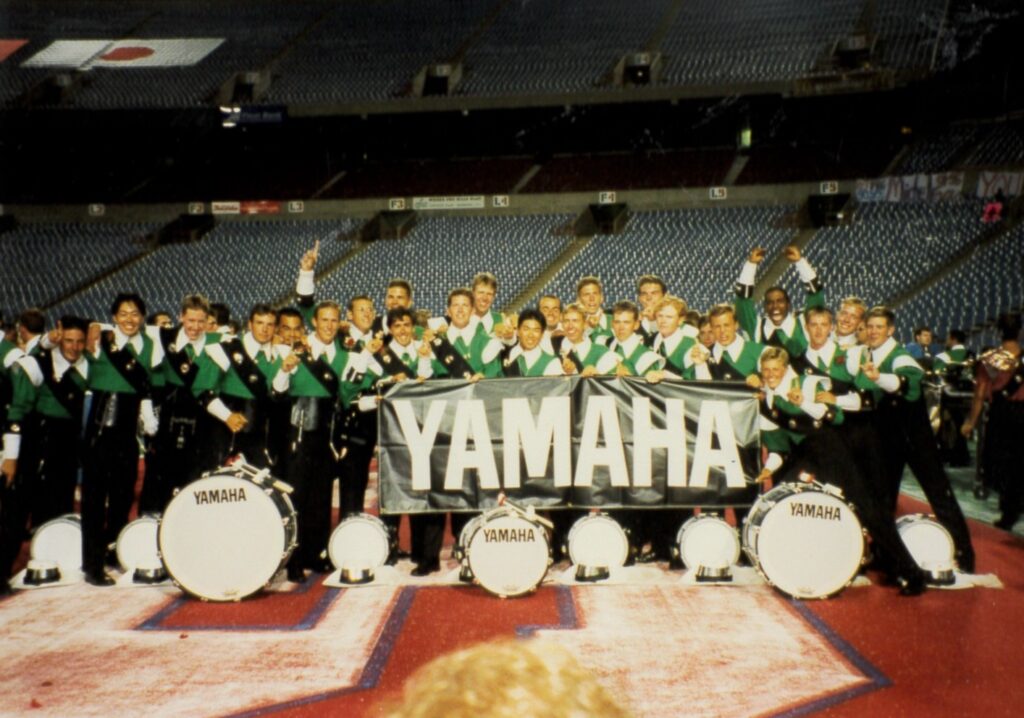
In 1993, I became the first Asian member of The Cavaliers. In 1995, I reached my age-out year—the final year I was eligible to march as a member.
The Cavaliers finished fifth in 1993 and fourth in 1994. In the Individual & Ensemble Contest, where I competed as a soloist, I placed seventh in 1993 and second in 1994. With those results behind me, I was determined to win both as a corps member and as a soloist in my final year. With that strong determination in my heart, I devoted myself to practice.
There was a special reason why I particularly wanted to win the solo competition. One of my senior members from Aimachi Symphonic Band, who had always supported me, once told me:
“I’m going to become Japan’s best at the company where I work, so you go out there and become the world’s best soloist, Uichi!”
Later, I received the wonderful news that he had indeed achieved the highest honor in Japan. I felt that it was now my turn to fulfill my promise.
Our final-year tour began, and we found ourselves in a fierce battle for first place against other corps.
One day, all the members were gathered together, and our respected percussion instructor, Bret Kuhn, asked us a question:
“Is there anyone here who doesn’t care whether we win this year?”
Several members raised their hands. When Mr. Kuhn asked them why, one member replied:
“As long as we can put on a great performance together, that’s enough for me.”
Mr. Kuhn listened and asked, “Really?” Then he continued:
“There’s nothing wrong with wanting to win. Of course, winning isn’t everything. But it’s important that every member has a strong desire to win together as a team.”
At the time, there was a certain feeling within the corps that even if we didn’t win, it would be enough to have a wonderful experience together. That sentiment was understandable, but Mr. Kuhn’s words brought us together with a renewed sense of purpose.
It was a moment when I once again felt strongly that I wanted to win with this particular group of people.
During the tour, I noticed a poster hanging on a wall. It featured a gymnast sticking a landing with both feet, accompanied by the words:
“A Champion Practices Like a Champion.”
When I read those words, I realized that success isn’t determined solely by the judges’ scores on competition day. It is also determined by the work and dedication that go into getting there.
From that day on, I made the most of every possible moment to practice. I practiced during breaks after meals, during water breaks, and even while everyone else was taking a nap at our next stop.
The Japanese members who toured with me that year still remember how much I practiced. Even today, they say, “Uichi practiced all the time that year.”
That was how determined I was to make the most of my final year.
Finally, the Wednesday of Finals Week arrived. This was the week of the DCI World Championships, and the Individual & Ensemble Contest was about to begin.
The venue was packed, with spectators even standing because there were no seats left. Since I had finished second the previous year, many members of other corps came to listen to my performance.
For my solo, I chose “Sakura,” which I had arranged myself. I had followed a practice method I learned from one of my senior members: keep practicing until you can perform the piece correctly three times in a row.
Then the big day arrived.
My performance started smoothly, but toward the end, during the final climactic section, I made several mistakes that I simply couldn’t accept.
“I messed up that part, too. And that part didn’t go the way I wanted…”
I sat down after finishing, overwhelmed by thoughts of everything I felt I had done wrong.
Then a friend from The Cavaliers came over to me.
“Uichi! That was incredible! The person sitting in front of me was crying while listening to you! There were so many other people crying, too!”
I couldn’t believe him. I assumed he was just trying to comfort me because I felt I had made so many mistakes.
Then the results were announced. On the judges’ sheet, someone had written:
“Bravo! So Emotional.”
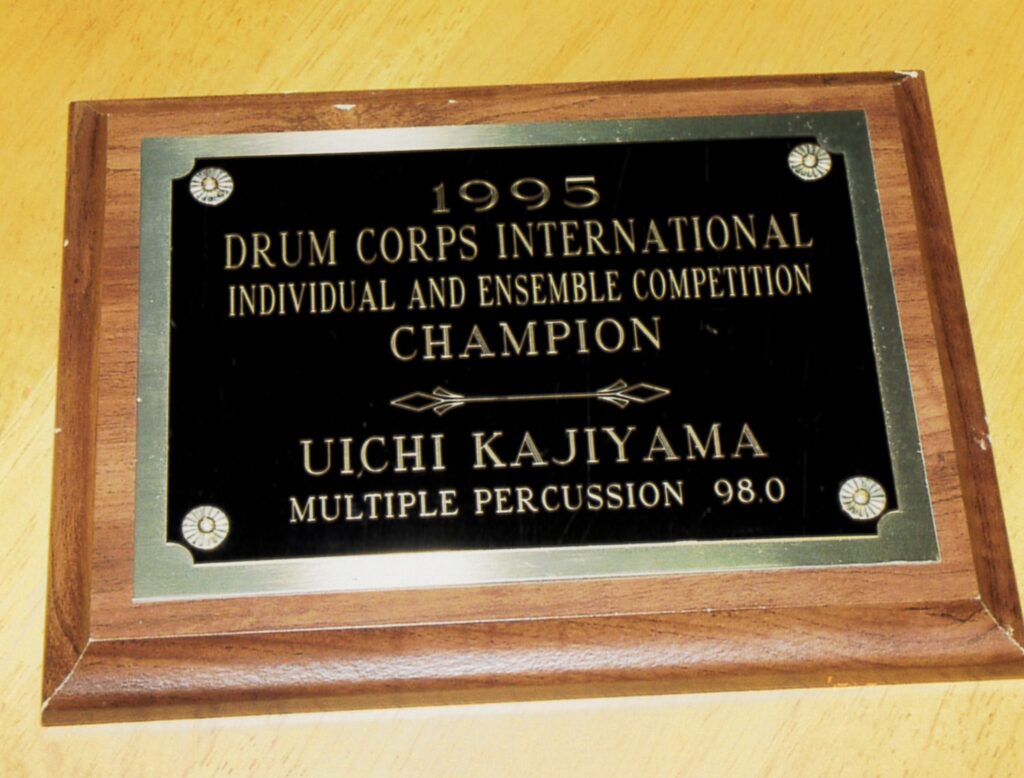
My score was 98.0, and I won the solo competition.
What made the result even more special was that my score was the highest across all divisions, including brass and percussion. As the highest-scoring performer overall, I also received a special cash prize.
The second-place finisher in my division was one of my closest friends and a leader in The Cavaliers. He had also won a world percussion competition in the past.
I remember quietly taking in the moment, with mixed emotions. Nevertheless, my friends, including him, celebrated my victory enthusiastically.
“Uichi, World Champion! Congratulations!”
It was an unforgettable moment.
Looking back now, what stays with me even more than winning is the memory of people from a different country, with a different language and culture, shedding tears as they listened to my performance.
That experience gave me the confidence that even when words cannot bridge the gap between people, we can still communicate what we feel deep inside.
People often say, “Music is a universal language.” Through my own experience, I was able to truly understand what those words mean.
I believe the same is true of English. Improving pronunciation and technical skills is important, but what matters even more is conveying your feelings to another person’s heart.
The same applies to musical performance. Avoiding mistakes is not the only thing that matters. Even if a performance is a little rough around the edges, playing or speaking with genuine emotion can sometimes touch someone more deeply.
Perhaps this was the most valuable lesson I gained from my six years studying abroad—an experience I could never have gained in the same way had I stayed in Japan.
The Cavaliers advanced to the DCI World Championships Finals after placing first in both the Quarterfinals and Semifinals.
That year’s program was a revival of The Planets by Gustav Holst, which the corps had performed ten years earlier, in 1985. It was a special season in which the passion of the members who had performed the show a decade earlier connected with the passion of our own generation.
At the Finals, we entered the field last among the twelve finalist corps, following our ranking in the Semifinals.
Before performing, all the members sang “Over the Rainbow” together. I can still vividly remember that moment, when we sang with all our hearts, almost shouting the words with emotion.
Then came the announcer’s introduction:
“From Rosemont, Illinois—The Cavaliers!”
The completely packed stadium erupted. The spectators rose to their feet and welcomed us with an enormous roar of applause and cheers.
Then the introduction to “Mars” began.
The first notes were played by the pit percussion section, including me. Following the drum major’s conducting and making eye contact with one another, we played the opening of the show for the final time as members of The Cavaliers.
>Spotlight of the Week: 1995 Cavaliers
It was the last time I would stand on that field as a member of the corps I had dreamed of joining since high school.
As I played, the faces of Mr. Kiyokazu Sekine, the director of Aimachi Symphonic Band, my friends and fellow members, and my parents and family came to mind. Knowing that I would never experience that exact moment again, I played with all my heart, filled with gratitude.
Spotlight of the Week: 1995 Cavaliers
Then came the awards ceremony.
The corps names and scores were announced in reverse order, beginning with twelfth place. When The Cadets of Bergen County were announced in second place, we tried to contain our excitement as we waited for the final announcement.
Then we heard:
“With a score of 98.30… From Rosemont, Illinois—THE CAVALIERS!”
Finally, our name was called.
Some members wore enormous smiles, while others burst into tears. Every one of us was savoring the moment when our dream had finally come true.
We hugged and shook hands with our fellow Japanese members, sharing the joy of victory.
On top of that, we also received the Best Percussion Award, presented to the percussion section with the highest score.
In my age-out year, I achieved three major honors: the DCI World Championship, the Best Percussion Award, and victory in the Individual & Ensemble Contest.
Thanks to Jeff Fiedler, the director of The Cavaliers, who had supported me since my first year studying abroad, and to the many staff members who guided us, I was able to experience the most wonderful season of my life.
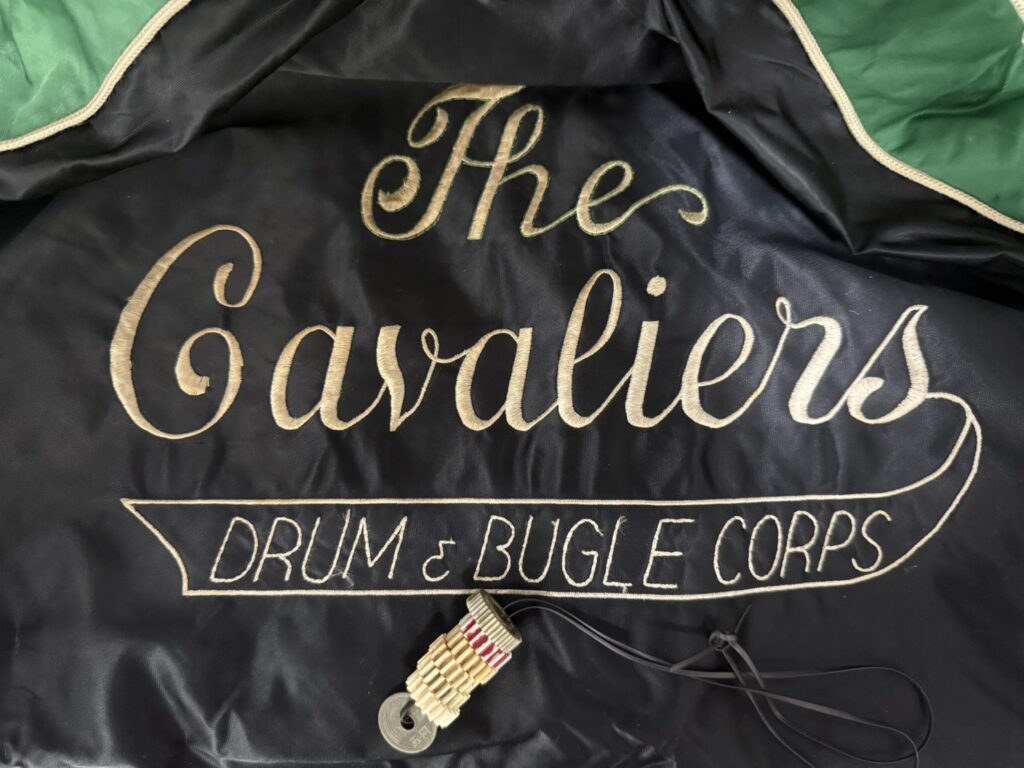
The Cavaliers have long been known by the nickname “Green Machine.” As a symbol of belonging to the Machine, members receive a commemorative item called a “Gear,” representing one part of the Machine.
Because I marched for multiple years, I had collected several Gears.
At some point, members, including me, also began wearing Japanese five-yen coins around our necks. I explained that the Japanese word for five yen, go-en, sounds like go-en, meaning a connection or bond between people. I told them that the coin symbolized friendship, and I remember giving five-yen coins to my fellow members.
Amazingly, more than thirty years after my age-out year, I hear that some of those members still wear their Japanese five-yen coins around their necks.
Less than eighty years ago, Japan and the United States were at war. Yet people from these two countries have built friendships through music and marching, and even today, some of those American members continue to wear Japanese five-yen coins as symbols of friendship.
For those of us who were members of The Cavaliers in the 1990s, there could hardly be anything more heartwarming.
The United States and Japan. The Cavaliers and Aimachi. I am proud that these five-yen coins, representing the bonds and connections that brought us together, are still cherished as symbols of the extraordinary friendships that grew from those connections.
My roots are in Aimachi Symphonic Band.
When I was ten years old, my mother encouraged me to join Aimachi, which was only about a five-minute bicycle ride from our home.
During my teenage years, I received outstanding instruction at Aimachi. I also learned the importance of caring for others and respecting them across cultural and religious boundaries.
I believe all these experiences guided me toward the world stage, where I would pursue the dream of becoming a world champion.
My challenges did not end when I retired from marching.
In 1997, I worked as an arranger and instructor for the Blue Stars. The following year, in 1998, I was welcomed onto the percussion staff of The Cavaliers during the corps’ 50th anniversary season.
The lessons I learned from both corps continue to form a major part of the foundation of my work as an instructor today.
In 1998, the year I graduated from Concordia University Chicago and returned to Japan, another unforgettable event took place.
On January 18, 1998, at Nippon Budokan in Tokyo, Aimachi Symphonic Band won its first-ever national championship at the 25th All Japan Marching Band and Baton Twirling Contest, receiving the Prime Minister’s Cup.
That day was also my birthday.
It became an unforgettable birthday—the day I said “Congratulations!” to more people than I ever had in my life.
I owe so much to Mr. Sekine of Aimachi, the senior members who guided me, the younger members who supported me, and my parents, who all helped me through my six years studying abroad.
I am who I am today because of them, and I am deeply grateful.
In the next and final installment of this series, I will share the story of how, in 2004, I became the first Japanese person to take and pass the DCI-certified judge examination.
This will be the last installment featuring stories from my years studying abroad.
Thank you so much to everyone who has followed this series and read each article!
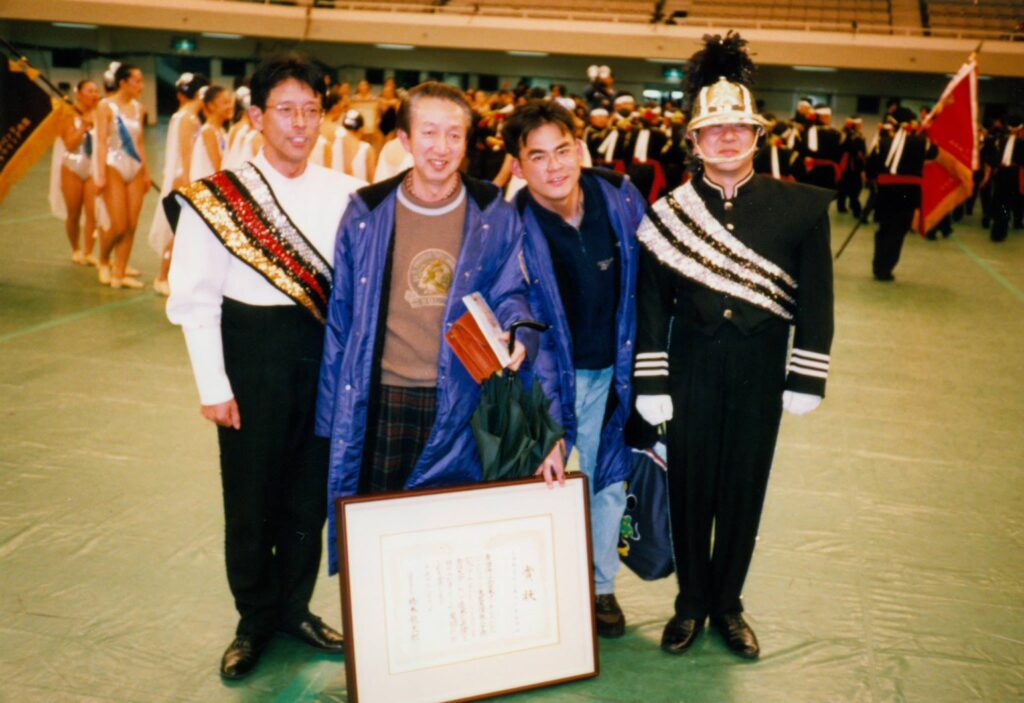
Photo 1: A commemorative photo with the percussion members after our victory. Yuji Nakamura is on the far left; I am fourth from the left; and Naoki Ishikawa is directly behind the letter “M” in the center.
Photo 2: The commemorative plaque I received for winning the solo competition, engraved with my name.
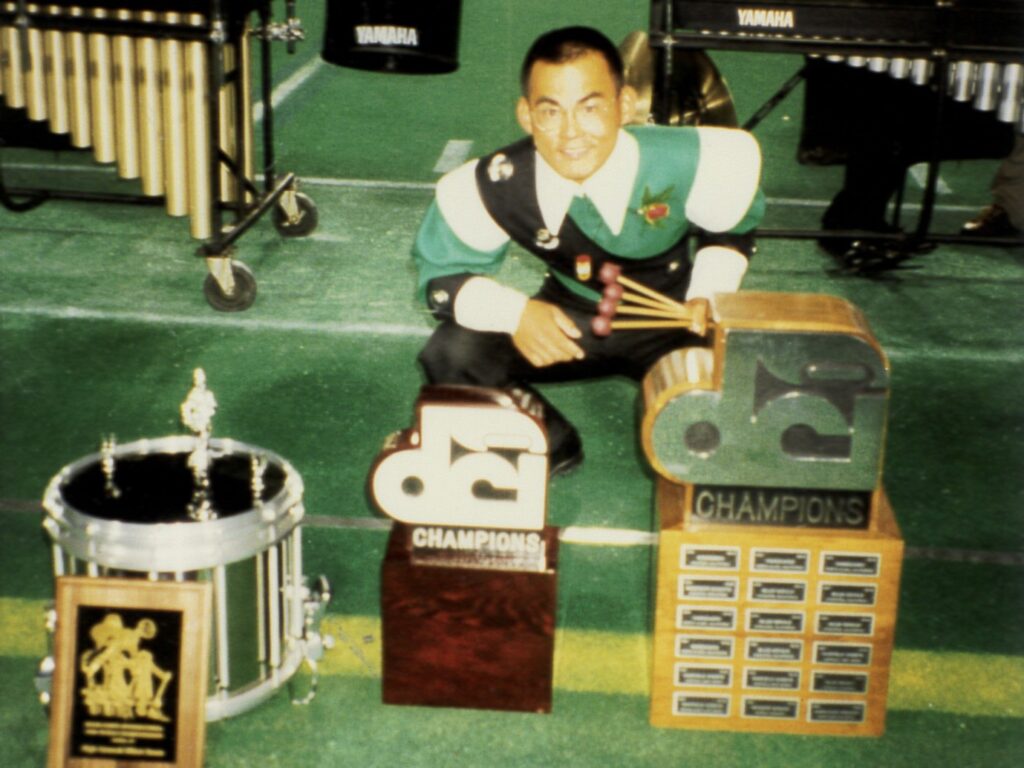
Photo 3: A commemorative photo with the DCI championship trophy.
Photo 4: My Cavaliers corps jacket and Gears.
Photo 5: A commemorative photo from Aimachi Symphonic Band’s first national championship, with Mr. Sekine, the band’s director, and the senior members who supported me.
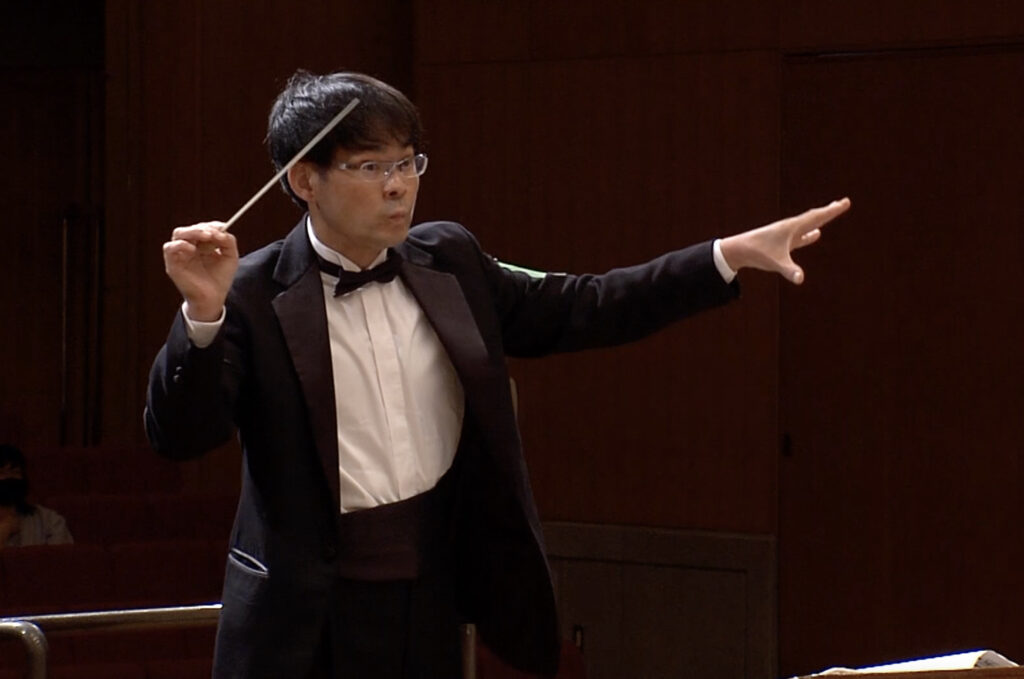
Uichi Kajiyama
Uichi Kajiyama graduated from the Music Department of Concordia University Chicago. He currently serves as Director of Bands at Aichi Institute of Technology Meiden High School, Technical Advisor and Conductor of the Nagoya University of Commerce & Business Symphonic Band, and Lecturer at Nagoya College of Music.
He joined Aimachi Marching Band, a recipient of Japan’s prestigious Prime Minister’s Cup, in 1984 and studied marching band instruction under Kiyokazu Sekine.
In 1992, Kajiyama moved to the United States. He became a member of The Cavaliers in 1993 and, in 1995, became the first Japanese performer to win the DCI Individual & Ensemble Solo Championship. That same year, he helped The Cavaliers win the DCI World Championship and the Fred Sanford High Percussion Award.
Following his performing career, he served on the instructional staff of the Blue Stars in 1997 and The Cavaliers in 1998.
In 2004, Kajiyama became a certified Drum Corps International (DCI) judge. He is also a certified instructor with the Japan Marching Band Association.