連載コラム【マーチングと海外】#3 マーチング留学で経験してきたこと(前編)(梶山宇一)
2026-10-01
In 1992, I had the opportunity to join The Cavaliers’ tour as an apprentice. Seeing their first championship performance live made me even more determined to pass their audition. I wanted more than anything to become a member of The Cavaliers.
Back then, there was no way to look up an audition packet online like there is today. The information I received in advance simply stated that the audition would consist of basic playing skills and a solo piece of my choice. Based on that information, I prepared as much as I could.
I practiced every day without taking a break. I started as early as 6:00 a.m., when the university opened, practiced between classes, and continued until around midnight, when the practice rooms closed.
At the end of November, during Thanksgiving week, I went to the audition at a facility in Rosemont, Illinois, home of The Cavaliers. I was extremely nervous.
There were many talented-looking people around me, including students from well-known American music schools. To be honest, I started thinking, “With so many talented people here, maybe it will be difficult for me to make the corps.”
The audition lasted three days, with many talented people competing for only three spots.
On Friday, the first day, we had a brief introduction and worked through some basic exercises together. On Saturday, we finally had the opportunity to perform individually in front of the instructors. That was the most nerve-racking part for me.
That evening, however, something very different happened. The current members and the audition candidates played the corps’ music together.
The Cavaliers’ audition was not simply a process for deciding who would make the corps. Even if you did not make it, the audition was designed so that you could learn many things from the experience.
At the time, I heard that some other corps would announce their results by Saturday afternoon and send those who were not selected home immediately. The Cavaliers, however, created an audition experience that was educational and allowed everyone to continue learning through the entire weekend.
I thought that was something truly special.
Then came Sunday, the final day.
One by one, the candidates were called into a private room and given their results. I saw many people walk out of the room with disappointed faces. Then, finally, my name was called.
I walked into the room and took a seat. One of the instructors sitting across from me looked at me and simply said,
“You made it!”
For a moment, I did not immediately understand what he meant. But from his expression and what he said afterward, I realized that I had been accepted.
I was incredibly happy.
And I still remember very clearly the feeling of putting on the green uniform for the first time.
After passing the audition, I began attending monthly camps in November. After spring training in May, I went on tour in June.
The first time I put on the green uniform and performed in front of an audience, I was extremely nervous. At the same time, I felt an incredible sense of excitement and emotion.
Among all the memories I have from that time, one of the experiences I remember most clearly was the first clinic I attended as a member of The Cavaliers.
More than 1,000 high school students had gathered at the venue.
Just before the performance, our leader began speaking to us. We were all nervous.
“If you think you are going to make a mistake…”
He paused for a moment.
Then he finished with one word:
“DON’T!”
Instead of relaxing, I became even more nervous. I remember being completely stiff with tension.
But that experience taught me something important.
At every venue, we were introduced as “The Cavaliers, the previous year’s World Champions.” I learned what it meant to carry the responsibility of that title—and to take responsibility for every single note we played.
That same leader also taught us another lesson that I have never forgotten.
He asked us,
“Do you know what a professional is?”
Then he gave us his answer:
“A true professional is someone who can make difficult things look easy, and make simple things look difficult. That’s what it means to be a true professional.”
Then he picked up a triangle that happened to be nearby and played just one note.
That one note was absolutely beautiful.
He did not simply explain what being a professional meant. He demonstrated it with the sound itself.
At the time, in Japan, people would sometimes say that “marching makes your sound worse.”
But what I encountered in America was completely different. I met people who had an extremely high level of commitment to music and the arts.
The Cavaliers attracted members who were seriously pursuing careers in music—people who would later become university professors, professional orchestra musicians, and other music professionals.
Among the musicians who came through the DCI experience were Chris Martin, principal trumpet of the New York Philharmonic, and Michael Martin, a trumpet player with the Boston Symphony Orchestra.
For me, my time with The Cavaliers was about much more than learning marching technique.
I learned how I should approach music as a musician, and what it really means to be a professional.
Those were lessons that I learned not through words alone, but through the sound and actions of the people around me.
The members I met through The Cavaliers are still my friends today, more than 30 years later.
During the long American summer vacation, they could have spent three months simply having fun. Instead, they chose, on their own, to gather from all across the country, improve their musical skills, and travel together as a corps.
We laughed together, encouraged one another, sang together, and shared countless experiences.
Looking back now, I realize that the bonds we built during those three months were something incredibly valuable—something that I could not have gained simply by going to college or entering the workforce.
In 1993, I became the first Japanese—and the first Asian—to become an official member of The Cavaliers.
In 1994, Michio Sakamoto joined, followed in 1995 by Yuji Nakamura, Naoki Ishikawa, Masayoshi Ishikawa, and Yuji Maeshiro.
Little by little, more Japanese performers began taking on the challenge of DCI.
And my friendships with them have continued to this day. Even when we live far apart, whenever we meet, we can talk about anything. They are truly wonderful friends.
The challenges taken on by these Japanese performers also had an impact on the Japanese marching community.
American instructors who were active at the highest levels of DCI began becoming involved with Japanese marching bands.
After I became a member of The Cavaliers, Mitch Rogers, who was a marching instructor with The Cavaliers at the time, and Michael Gaines, who was a color guard instructor, became involved with Aimachi.
Their involvement brought a new perspective and new energy to the Japanese marching community.
When Mitch and Michael were preparing to go to Japan, they asked me,
“Can you teach us some simple Japanese words we can use while teaching?”
So I made them a list of useful everyday phrases and instructional words and wrote them down on paper.
For example:
“MO ICHI DO” (もう一度) = “Again”
Today, something like that could probably be solved instantly with ChatGPT.
But back then, it could not.
Looking back, I think those small exchanges may have helped build a relationship of trust between us.
Back then, it wasn’t just language exchanges like this—information itself was precious.
Today, if you want to know which designers work with which groups or what kinds of shows they create, you can simply search online.
Back then, however, there was a great deal of information that you could only learn by actually going to the United States and meeting people in person.
In that sense, the fact that I was able to meet some of the leading designers and instructors in the world through The Cavaliers, and that they eventually became involved with Aimachi, was a remarkable development for the Japanese marching community at that time.
Before I left for the United States in 1992, I talked with my mentor, Kiyokazu Sekine, the representative of Aimachi, about studying in America.
He said to me,
“Maybe someday this will benefit Aimachi. Why don’t you go to America starting next year?”
At the time, I had absolutely no idea how much those words would eventually lead to.
But looking back now, I realize that the things I learned from The Cavaliers, the friends I made there, and the relationships I built with American instructors and designers all became connected to Aimachi in ways I never could have imagined.
My next story will be about the 1995 tour—―and my victory in an individual solo competition.
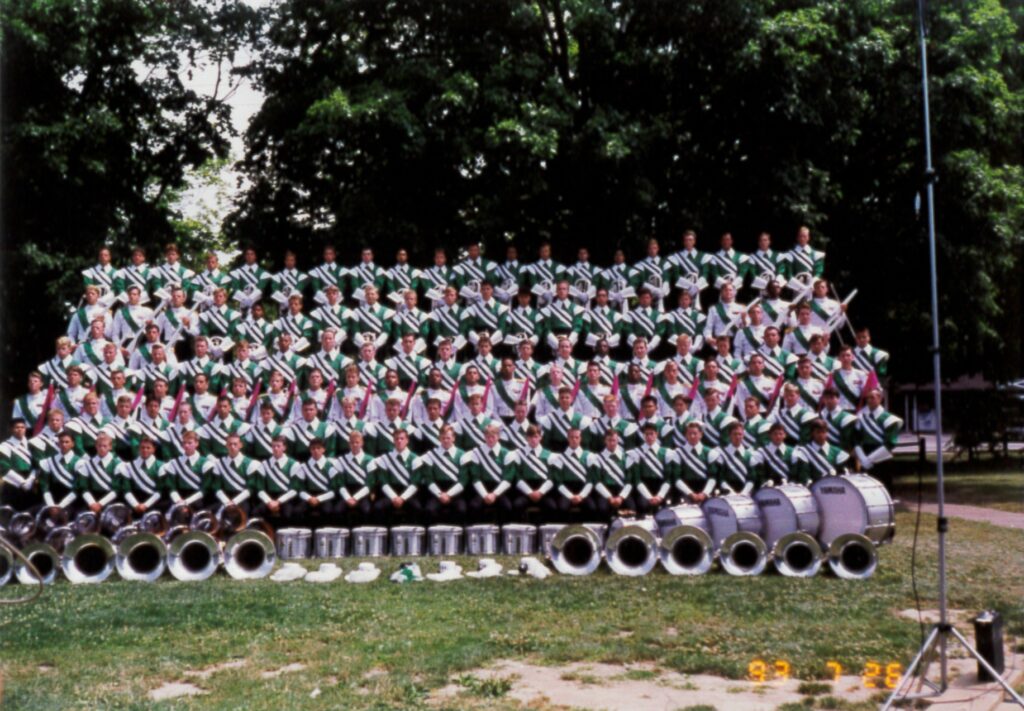
Photo 1: A group photo taken during the season. I am the seventh person from the right in the second row from the front.
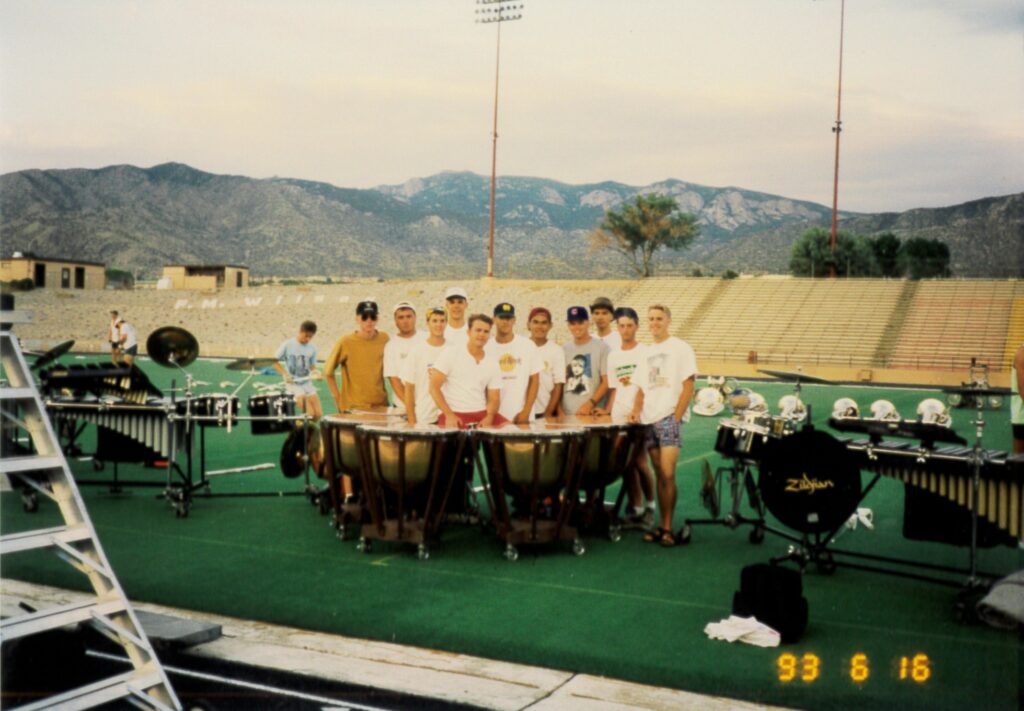
Photo 2: A group photo with the pit members in 1993. The person sitting on the timpani chair in the center is the leader who gave me a lot of advice and guidance.
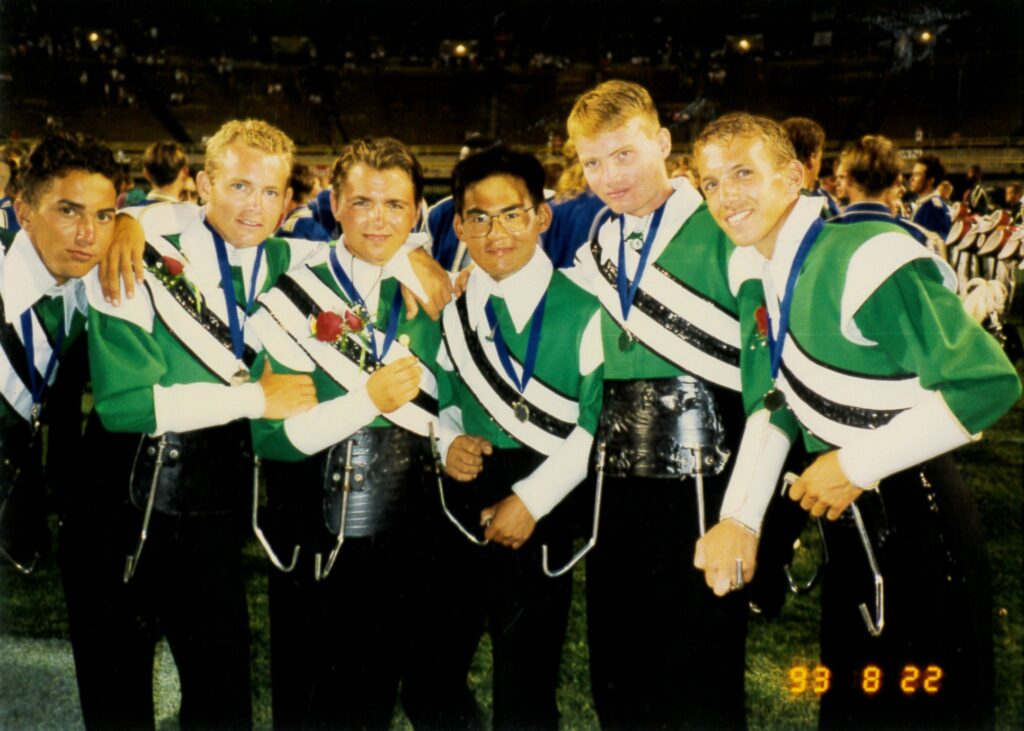
Photo 3: A photo taken after the closing ceremony in 1993 with some of my close friends from the tenor section.
Uichi Kajiyama
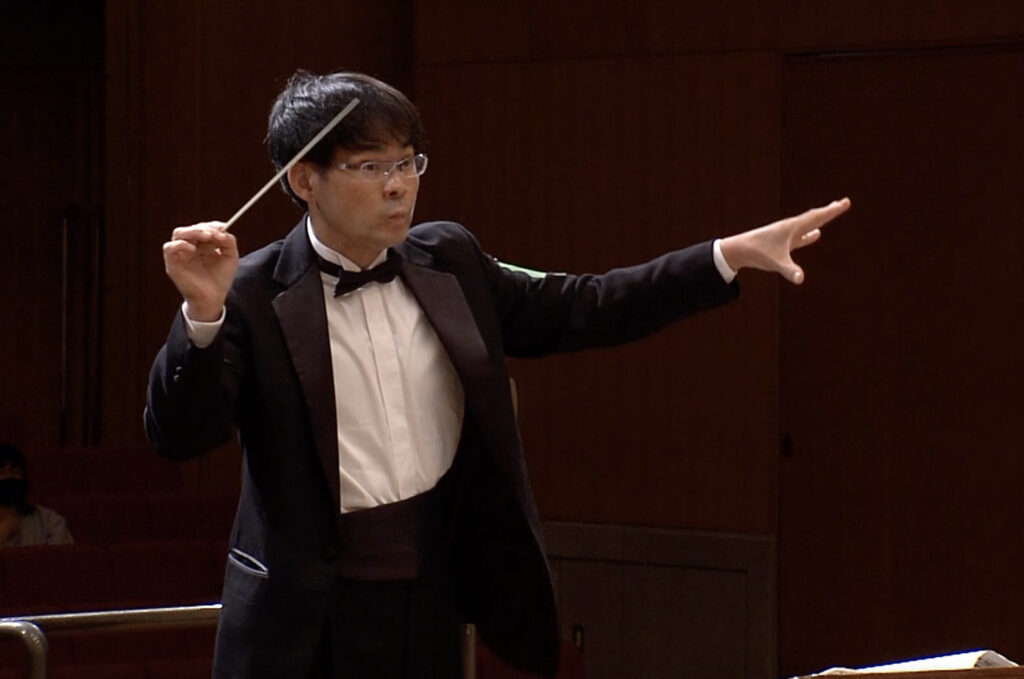
Uichi Kajiyama graduated from the Music Department of Concordia University Chicago. He currently serves as Director of Bands at Aichi Institute of Technology Meiden High School, Technical Advisor and Conductor of the Nagoya University of Commerce & Business Symphonic Band, and Lecturer at Nagoya College of Music.
He joined Aimachi Marching Band, a recipient of Japan’s prestigious Prime Minister’s Cup, in 1984 and studied marching band instruction under Kiyokazu Sekine.
In 1992, Kajiyama moved to the United States. He became a member of The Cavaliers in 1993 and, in 1995, became the first Japanese performer to win the DCI Individual & Ensemble Solo Championship. That same year, he helped The Cavaliers win the DCI World Championship and the Fred Sanford High Percussion Award.
Following his performing career, he served on the instructional staff of the Blue Stars in 1997 and The Cavaliers in 1998.
In 2004, Kajiyama became a certified Drum Corps International (DCI) judge. He is also a certified instructor with the Japan Marching Band Association.